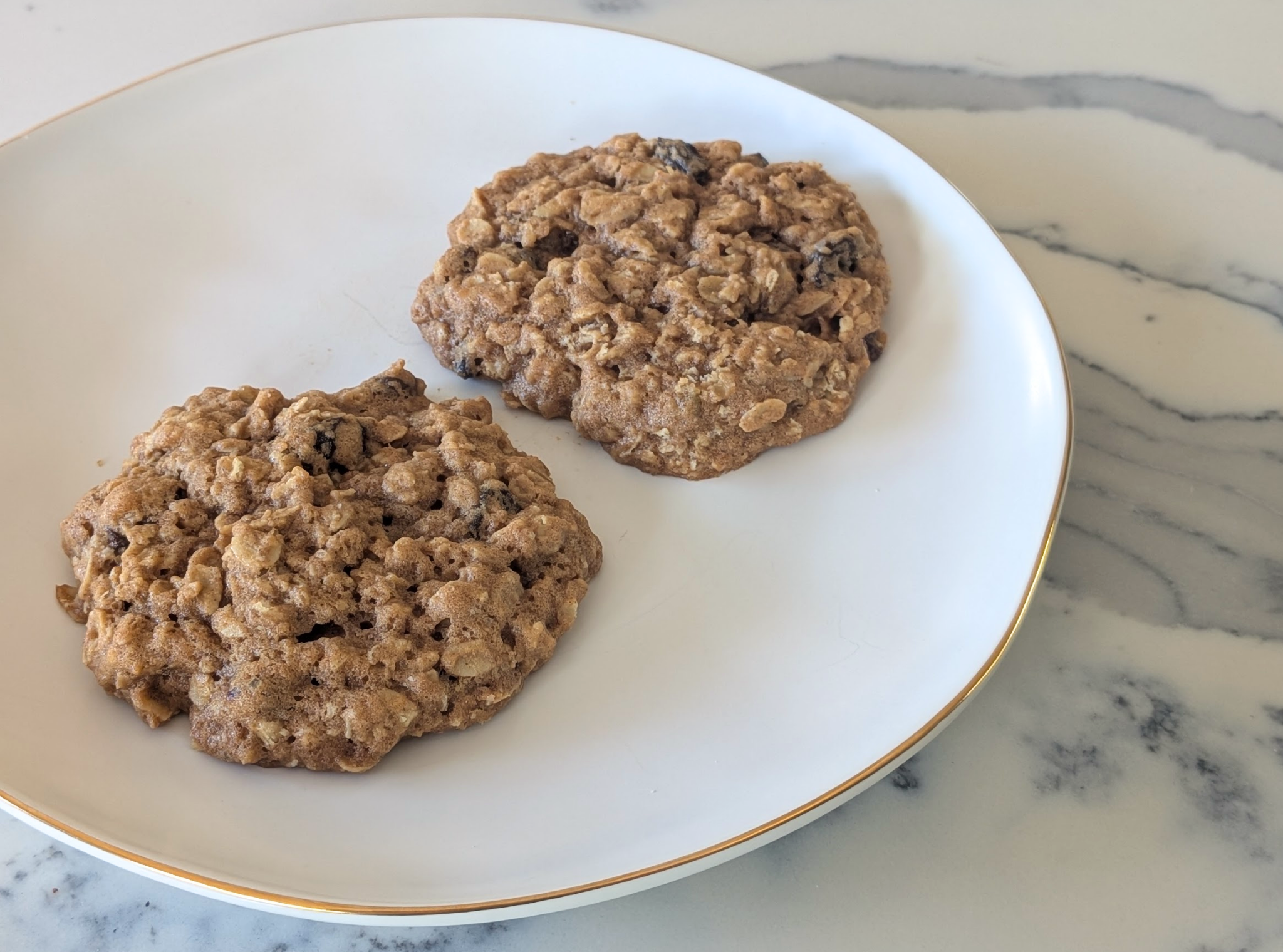
What makes a cookie chewy? My brother-in-law Rudy posed this question to me recently. He wondered whether it had something to do with the ratio of baking soda to baking powder. I realized I didn’t entirely know the answer.
So I did some digging.
What makes a cookie chewy?
As it turns out, there isn’t a single magic ingredient. Chewiness comes from a combination of ingredients, proportions, and how you bake the cookies.
Brown sugar helps. Brown sugar contains molasses, which helps retain moisture in the dough. You can take things to an entirely different level with dark brown sugar, which contains more molasses and with it, additional moisture. This both adds to the chew, and I love the deeper flavor it lends to my cookies.
Extra egg yolks help, too. Yolks add fat and richness without adding as much water as another whole egg would. I like two eggs plus two additional yolks to help create a rich, dense center.
Baking soda and baking powder play a different role. Rudy’s instinct wasn’t entirely off: leaveners affect how much a cookie rises and spreads, which can certainly change the final texture. But adjusting their ratio isn’t the primary lever for making a cookie chewy. I used a teaspoon of each here for a cookie with some lift that stays nice and thick.
Chill the dough. Refrigerating cookie dough firms up the butter, which slows spreading in the oven. This helps the cookies stay thicker, with soft centers rather than thin, crispy edges. I chilled this dough for a full two hours before baking.
Size and baking time make a difference. A larger cookie can develop golden edges while retaining more moisture in the middle. Pulling them from the oven while the centers are still soft keeps them from becoming crisp as it cools.
Which brings me to my cookie-size experiment.
How big is big?
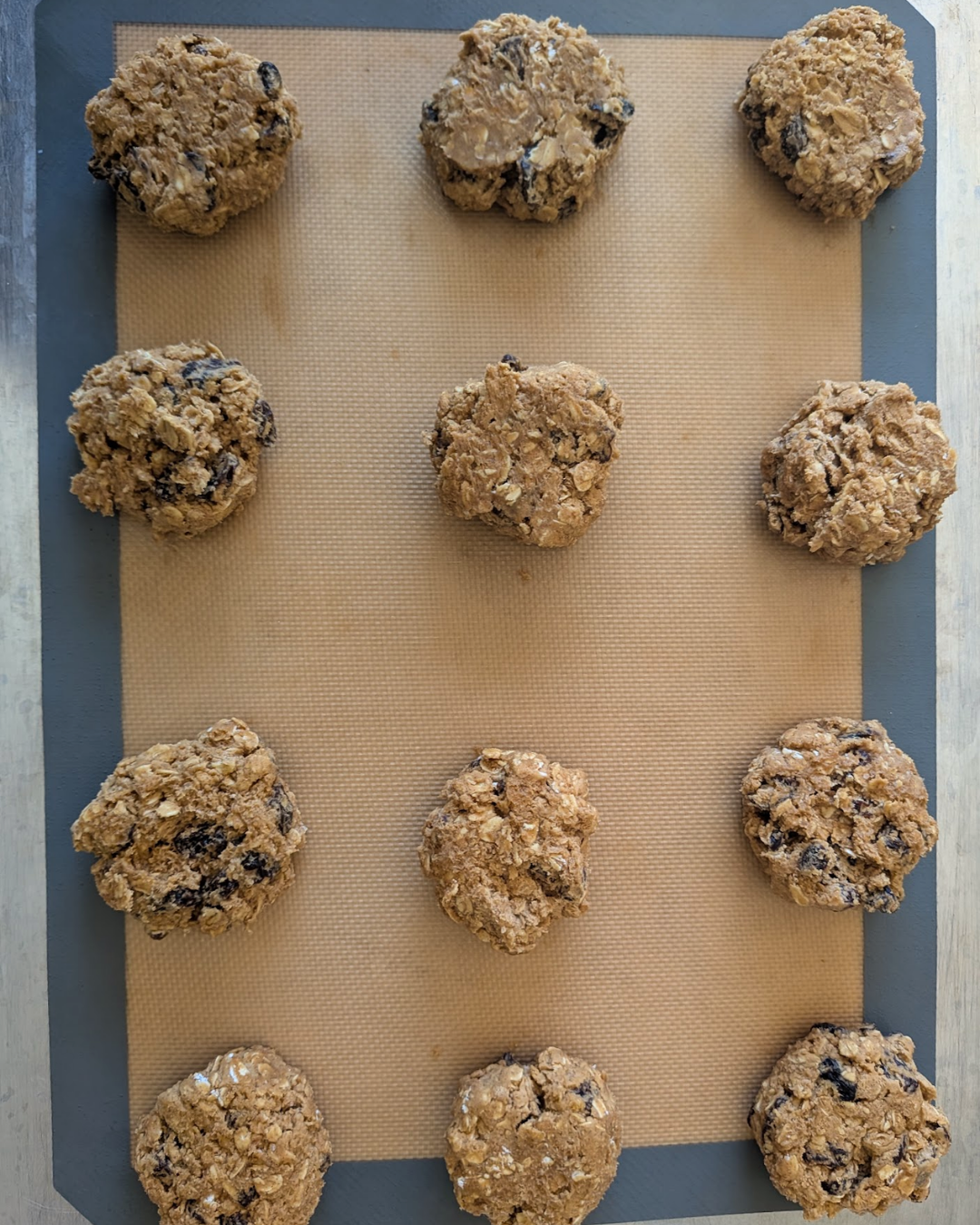
I tried three sizes: roughly 2, 3, and 4 tablespoons of dough. The smallest made a more typical-size cookie, while the biggest was just a tad too big (more like a small meal than a large cookie!). Three tablespoons was the clear winner: big enough to stay thick and soft in the middle, but not comically oversized.
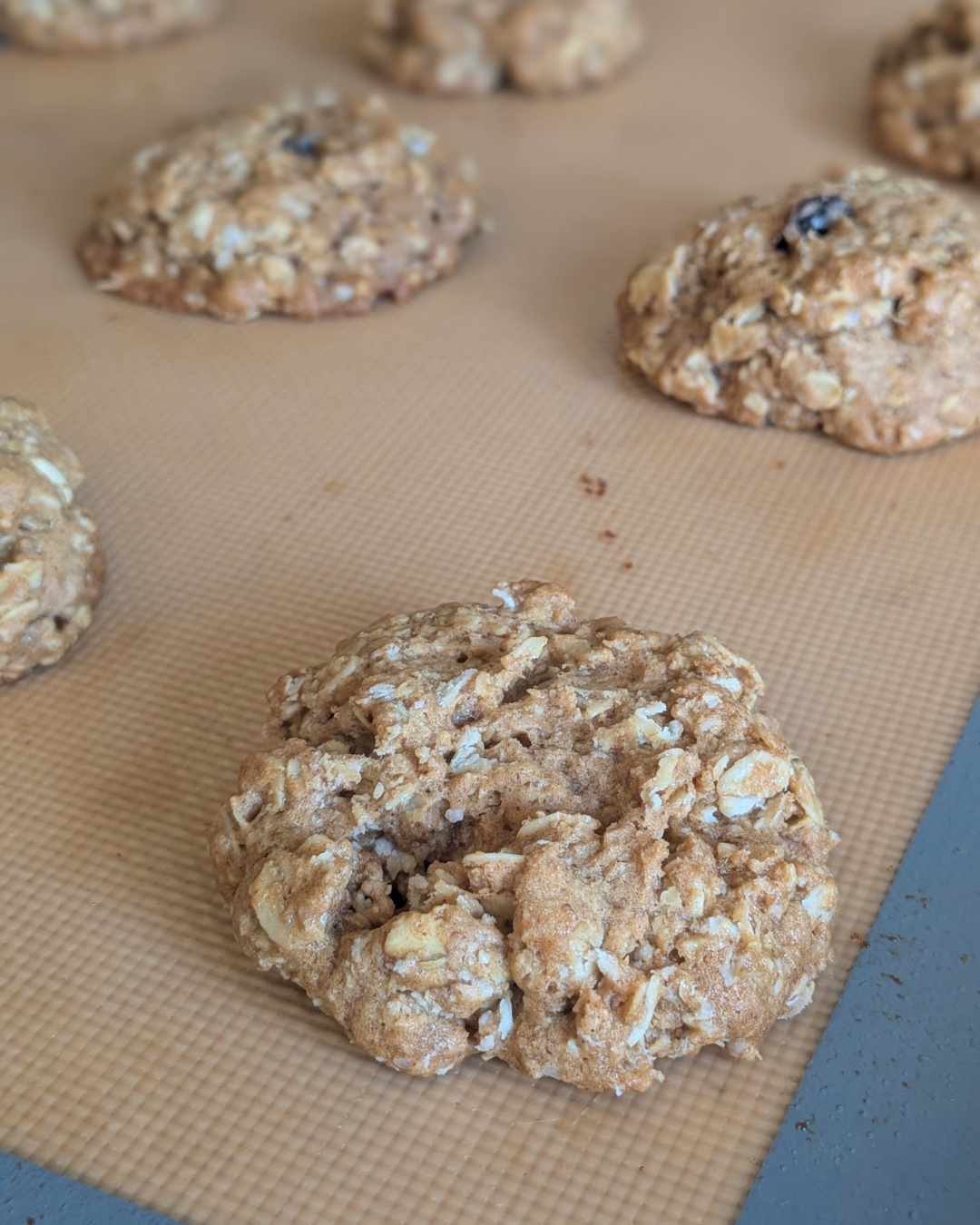
I flattened the dough balls slightly before baking and gave them about 12–15 minutes in a 350°F oven. The result was exactly what I’d been after: crisp around the edges, thick and chewy through the middle.
My kids were big fans. Dorian declared, “These are amazing—you have to put them on your blog.” Even my discerning baker Avery gave his stamp of approval. Eloise just kept asking if she could have another.
I’d say that settles it.
Big & chewy oatmeal raisin cookies
Makes about 2 dozen large cookies
1 c butter, softened
¾ c packed dark brown sugar
¼ c granulated sugar
2 large eggs
2 large egg yolks
2 tsp vanilla
1 ¾ c all-purpose flour
2 tsp cinnamon
1 tsp baking powder
1 tsp baking soda
1 tsp salt
3 c old-fashioned oats
1 ½ c raisins
Beat the butter and sugars together until combined and fluffy. Beat in the eggs, egg yolks, and vanilla.
In a separate bowl, whisk together the flour, cinnamon, baking powder, baking soda, and salt. Add the dry ingredients to the butter mixture and mix until just combined. Mix in the oats and raisins.
Chill the dough for 2 hours. Don’t skip this step—the cookies will spread too thin.
Heat oven to 350°F. Scoop the dough into large balls, about 3 Tbsp each, and place on a lined baking sheet. Flatten each ball slightly with a spatula.
Bake for 12–15 minutes, until the edges are set but the centers still look soft. Let cool on the baking sheet for 5 minutes, then transfer to a wire rack.
These are especially good warm from the oven with a glass of cold milk. Once fully cooled, store in an airtight container at room temperature for up to 4 days to keep them soft and chewy.
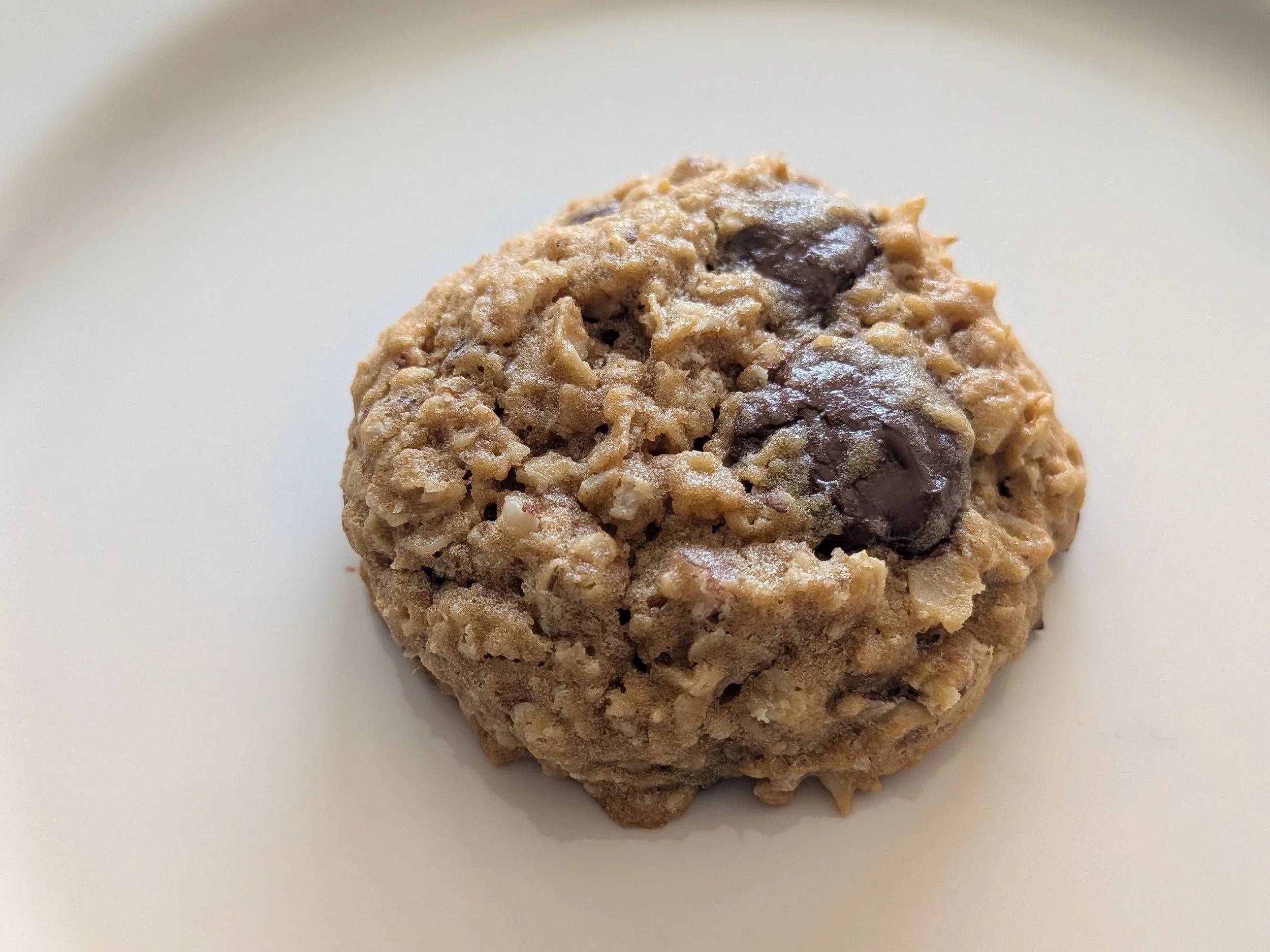
Variation: oatmeal chocolate chip pecan cookies
For a chocolatey twist, omit the cinnamon and raisins. Instead, fold in 10 oz chocolate chips and ¾ c chopped pecans.
Follow the remaining instructions as written.